teds
teds
Author Archives: teds
teds
Author Archives: teds
There is nobody on earth who can lay claim to never making a bad decision. People make too many decisions for them not to make bad decisions once-in-a-while. Hopefully, those decisions have little impact. However, there will be occasions where you make some that have big consequences.
It’s going to happen. You try to do everything in your power to avoid these bad decisions. Perhaps, the information you needed was not available at the time you made the decision. Or, someone gave you the wrong data, whether intentionally or not. It’s possible you made a rash decision without giving much thought to the consequences of the decision. Whatever the case, the result may turn into an unpleasant and stressful situation.
You need to face up to the consequences. Take ownership of the decision and don’t pass the blame. It’s possible you will have to deal with someone if they didn’t give you the right information or they deceived you in some manner. Their action may be the cause of the wrong decision, and you have to choose if you should let that person go as a result. However, if you were the one that was responsible for making the final decision, then the consequences of that decision rests with you.
Stay confident and don’t panic. Learn about what happened and why. Then, try to find ways to reduce the impact of your decision. If it is a business decision that costs your company some money, make sure you let your management know about it right away. Don’t try to ignore the problem thinking that management may not notice. They will be upset when a mistake costs the company money. But, they will be even more upset if you don’t make it known in a timely fashion.
Don’t be afraid to talk to someone who may be able to help with the situation. It could be your boss or a mentor. They may be able to shed some insight into the situation. In fact, you could be blowing the situation out of proportion, and they will know how to get you out of it. But, they can only help if you give them timely information about it.
If the situation requires presenting your case to higher-level management, try to prepare alternatives on how to reverse the situation or reduce the impact. If these managers see that you have taken control of the situation, they may decide to let you run with the alternatives, although probably with a watchful eye of your manager.

Two cannot walk together except if they agree and therefore communication has always been a tool to facilitate understanding between people and help us carry out our usual activities without glitches. Maybe you have a presentation, you're writing an email, or carrying out any simple task, your progress and productivity can be affected by how you communicate.
As a result, it becomes expedient that both the message receiver and sender do not have miscommunication accruing from the delivered message. In today's world, technology has made communication easier but regardless, many people still find it herculean to communicate without being misunderstood or misinterpreted.
There are two major forms of communication, which are written and verbal. If you're going to be communicating orally or you're employing a written medium, the first thing you should do is to proofread and scrutinize what you have prepared before you proceed to finalize the copy.
It would also be helpful if you can look out for other possible interpretations of the message to know if there's any need to make further...

Some people contend, that in it's simplest form, life is a series of choices. This is, in some sense, true. Except that it's not that simple, because life itself is not that simple. The complexity of life or, rather, living a life, means that the choices the average individual faces over the course of a lifetime are equally complex.
These choices range from simple survival decisions (Should I eat that mushroom?), to difficult moral personal choices (Should I speak out against this injustice and incur increased personal risk?) Obviously, the one thing that all these decisions have in common are the option of choosing action and outcome. However, because the nature of of these various actions, and their potential outcomes, vary wildly, no one strategy can encompass the process of deciding between them This is where an understanding of what a decision is becomes important.
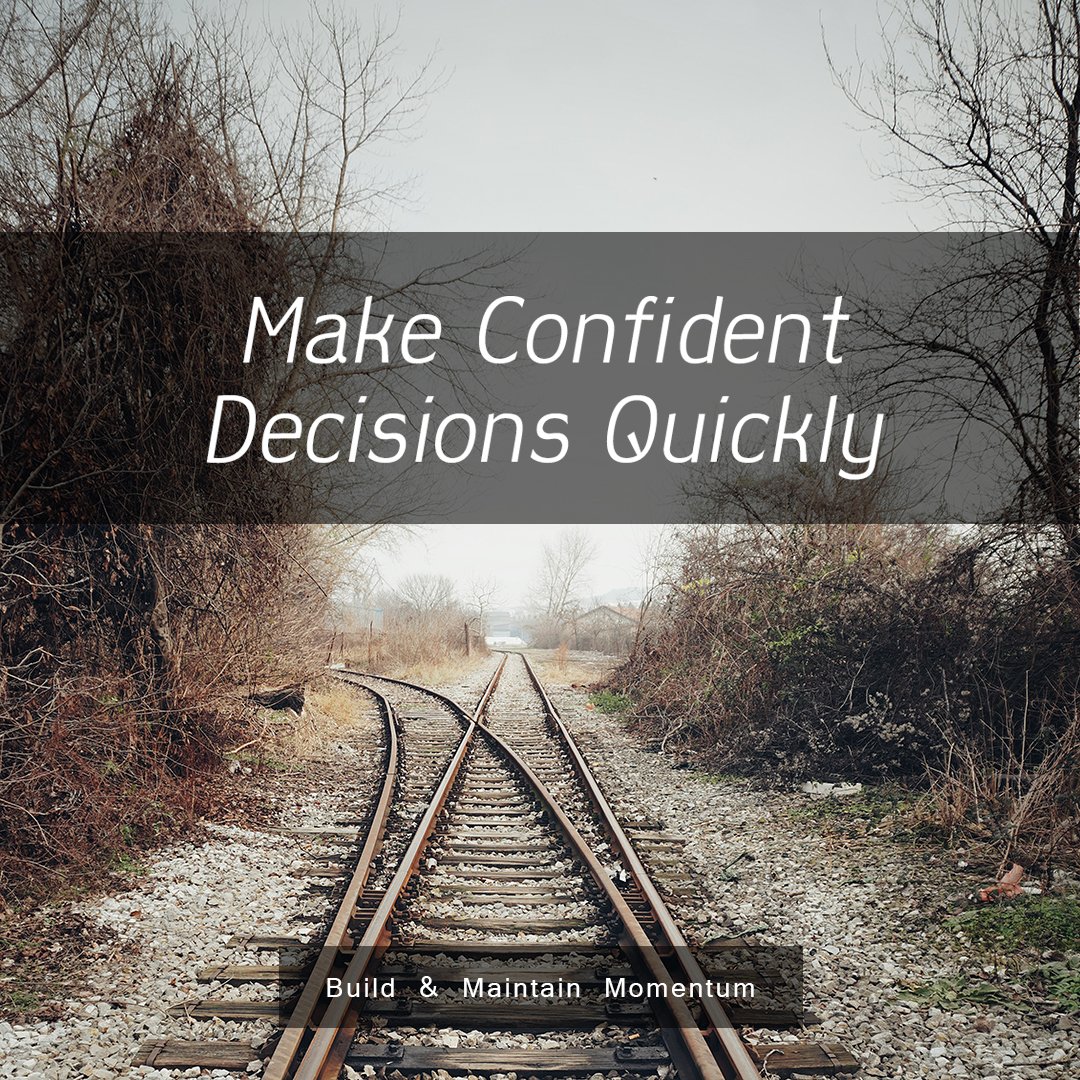
A decision is, of course, the action of deciding something. A person faced with a choice, makes a choice. The most basic example of this is the proverbial fork in the road. When facing a fork in the road, you have the choice of going left or going right. You stop for a period of time while you think, then you decide to go either left or right. Once the decision has been made you take the path you've chosen.
That's straightforward and obvious, right? To some extent, the answer to that question is yes. To a greater extent, however, the answer is no. To become a more efficient and more focused decision maker, you need to understand all the processes that went into making the simple decision above.
First, there was a problem. The path you were walking on divided into two. Second, there was the nature of the problem. Because the path divided, you were forced to go either left or right to reach your destination. Third, you needed to choose between these two options in order to continue. Fourth, you utilized your experience, knowledge and intuition to decide which option was best suited to your needs. Fifth, you actually made the decision. Finally, you, once again, began moving forward towards your destination based on that decision.
As you can see, the simplest of decisions entails a number of steps. In most cases, we handle these steps subconsciously, without really being aware of what it is we are doing. When the decision we are faced with is simple, this "autopilot" method of choosing isn't a problem. However, when more complex decisions need to be made, not understanding the process can give rise to difficulties.

Are you good at making decisions? The skill is natural for some people while others struggle to make even the most basic decisions. While personality types can play a role in one’s ability to make decisions, it’s also a skill that can be learned.
One reason people don’t like to make decisions is they don’t want to be held responsible for the outcomes. This reluctance is a defense mechanism as others may criticize you if you don’t choose wisely. It could erode the confidence others have in you regarding your ability to make decisions. However, you can take steps to reduce it from happening.
One of the main factors in decision making is confidence. Therefore, building confidence will help you make decisions. Others will also follow your lead as they will respect your confidence. When you make decisions with confidence, they have no choice but to recognize your authority.
Decision making requires finding out the right information. You won’t get far if you start making decisions without information to back them. You need to be informed when making your decisions which means you have a bit of detective work to do. You have to get as many of the facts as you can before making most decisions.
Often, you won’t get all the facts you need for one reason or another. In this case, you will need to take a leap of faith and rely on your confidence when making decisions. That’s an unfortunate part of the process and one that makes people choose wrong directions sometimes. But, as long as you decide using the information you have available, you can defend your choice.
As part of the decision-making process, consider coming up with alternatives. List out all possible alternatives based on the current information. You can rate the alternatives on a scale of your choosing. This rating can help you when making the decision. You can choose a star-rating system or a percentage system (0-100), etc.
Another technique people like to use is to list out the pros and the cons. To do this, take out a blank piece of paper and write a dividing line in the center. Create the heading “Pros” on the left, and “Cons” on the right. Then, list out the pros and the cons. You can use this to guide you with your decision. Try not to make this process too mechanical as the list may contain several subjective items.
How do you make a decision? Do you know the steps?
If you’re having trouble feeling confident in your actions and wish you had an unwavering self-belief in your decisions, maybe it's time to look at your decision-making process. Decisions made impulsively or without careful thought might not always turn out the way you hope they will.
Of course, there's something to be said for instinct and even dumb luck. But what if good decisions were inevitable rather than occasional? Imagine for a moment how it would feel to know you're right before you even act.
This is because there are steps you should be going through when making a decision. Let’s take a look at those now.
Start With an Open Mind
Do you automatically have all the answers? Probably not. Some of your beliefs might be biased, faulty, or illogical. Accepting you might have things to learn is the first and most crucial step to making decisions. Take a step back from everything but the raw facts regarding what you're trying to decide.
Get the Facts
Do you have all the information you need to make an informed decision? Are there things you need to learn? What about examining the options? Have you considered multiple solutions? Take time to put the work in to gather what you need to proceed with confidence.
Predict the Future
Once you have some choices in mind, try to imagine how they're going to play out. Sometimes what looks good might be a great temporary solution, but you're going to need to do something different in the long run. If you make a certain decision right now, ask yourself if this will still be a good decision in the morning? What about next week? Or next year?
Get Another Opinion
Do you have a mentor or someone you can trust whom you could talk to about this? While you might skip this step on the small stuff, it's worth having someone you trust weigh in with their opinion whenever you make a big decision. They might see something you're missing.
Act
Sometimes the hardest part of making decisions lies in making the actual decision. It’s tempting to go back over the research a few more times or keep looking for other alternatives. At some point, you’re going to need to act. Take your best solution and move forward with it with confidence. You’ve done all the work. Now comes the part where you put this newfound trust in yourself into action.
The best part? The more you run through this process, the more confident you’ll feel about making decisions in the first place.

As simple as communication may seem, it can shape the course of your life positively or negatively. Communication plays a significant role in all areas of your life and your personal life, social gatherings, and work-life aren't immune to its effects.
For instance, just as you need good communication skills to be able to enjoy better relationships with your romantic partner and loved ones, you also need to communicate effectively with your colleagues at work so that you can achieve success and shield your professional career from hitting the rock.
You'll be amazed at how all aspects of your life will be incredibly fine-tuned when you develop effective interpersonal communication skills for these skills will help you present your points accurately, tailor your thoughts wisely, and deliver your ideas precisely. Here are some of what you stand to enjoy when you improve your communication skills....
Read on by claiming your free copy of this brand new report!
Did you know that more than half of the businesses that start this year will likely fail within their first year? While this is unfortunate, it shouldn’t stop you from running and starting your own business. The reason for failure is because most businesses lack proper information to be successful in the first place.
Remember, all this information is easily discovered before you get started. Doing your due diligence with research will improve your chances of running a successful business.
Here are three important tips to follow.
Know Your Target Audience and Competition Well
You can’t say that the products and services you create are valuable and worth it if you can’t define exactly who your target audience is. Without a target audience, you will have no direction or understanding to improve upon your ideas to scale your business and increase sustainability.
Understanding your competition allows you to establish your creditability, value, and difference within the industry. In addition, through proper competitor analysis, you gain essential knowledge to understand your audience better, improve your products, and perfect your marketing strategies.
Create Highly Interactive and Valuable Content
Anything you provide to your target audience should be paired with highly valuable content. Without content, you can’t effectively find your audience or market to them. Not only does content increase brand visibility, but it also improves your trust and credibility. The more free information you provide through content, the more likely they are to make a purchase and become a loyal customer to your brand or business.
Always Commit to Improvement
Again, your audience is the most important for the success of your business. Without them, you would not be profitable. As you learn more about your target audience, you will likely need to make changes or improvements as time goes on. This requires taking the time to ask your audience important questions and feedback.
These three vital yet simple tips are exactly what you need to run a successful business. Knowing your target audience and competition is only the first step to unlocking your true potential as a business owner. From there, you need powerful content to keep them engaged and to learn even more about your target audience as your business gets older and better. Finally, you must commit to improvement to make sure they stay happy and committed to your business.

Do you find it hard to say no to instant or short-term gratification? Are you constantly questioning why you struggle to achieve your goals, and feel like everything or everyone is getting in your way? Like many other people around the world, you likely lack willpower and don’t know what to do to improve it.
A lack of willpower hinders your ability to make informed and positive decisions, ultimately leading you down a path you don’t enjoy. However, willpower can easily be improved with the right tools, resources, and information. It starts with adjusting your habits or adopting new ones.
Here are five habits to adopt to improve your willpower and maximize success in all areas of life.
Focus on Priorities First
Having strong willpower starts with understanding yourself and what you value most in life. The more you focus on these things and what value they bring, the less likely you are to give in. In other words, if you understand that instant gratification is not as rewarding as results are, you’ll become more motivated to focus on your priorities.
Set Reminders and Consistent Deadlines
A great way to keep these priorities at the top of your mind is to set reminders and deadlines where appropriate. A lack of willpower usually indicates that you lack structure. A proper and consistent deadline can mitigate the risk.
Keep It Minimal and Eliminate Choices
Don’t give yourself any other choices but to be successful. For example, if you are trying to eat a healthier diet, don’t buy snacks that will throw you off track. The fewer choices you have, the less likely you are to make a mistake.
Don’t Go Hungry or Thirsty
Dehydration and hunger can make it challenging to make the right decisions or be productive altogether. So always have a water bottle and healthy snack with you to quickly curb your hunger without having to go anywhere. But, again, give yourself fewer opportunities to make a mistake.
Practice Mindful Meditation
Another great habit to incorporate within your daily life is mindful meditation. With mindfulness, you learn more about your weaknesses and why you give in. It also reduces stress and allows you to build confidence from within. The more attention, time, and patience you give your body, the more likely you are to make good decisions and not let lack of willpower get in your way.
If you want to be more successful in life, improving your willpower is necessary. This can be done by slowly incorporating each of these five habits. Over time, you will see just how easy it is to say “no” to short-term gratification and say “yes” to long-term success and happiness.

Staying energetic throughout work is something most Americans and people around the world struggle with. While proper diet, sleep, and hydration certainly play a role, many other factors can contribute. The simple fact of not wanting to do the work or being in the wrong career can quickly drain your energy too.
Nothing is worse than trying to get through your daily work tasks while struggling to keep your eyes on hope. Thankfully, you can incorporate many tips and tricks into your everyday life to manage it much more easily.
These five tips will help you stay energetic at work to maximize productivity.
Avoid Stimulants and Remember to Hydrate
While coffee or sugary drinks may feel like they give you energy, eventually they will lead to a crash that is much harder to recover from. Likewise, stimulants can easily affect your sleep schedule, making it hard to go to bed or wake up. They can also cause dehydration that further increases your fatigue.
Do Light Physical Activity before Work
Believe it or not, physical activity before work at the start of your day will actually improve your energy levels. This is because exercise increases endorphins that make you feel better. It also helps improve your metabolism, which is essential for controlling and maintaining your energy levels throughout the day.
Keep Your Workspace Productive and Bright
Rid your workspace of all distractions and make sure there is as much natural light as possible. Sunlight is vital to producing vitamin D, an essential nutrient that makes you feel rested and content or happy. Proper vitamin D levels are also known to improve the quality and duration of sleep.
Eat for Fuel Not Convenience
While it may be evident to most, it is important to note how much your diet can affect your energy levels. For instance, if you start your day with processed, high-calorie food and a sugary breakfast, you are more likely to experience fatigue before making it to lunch. This is because your body requires more energy to metabolize high-calorie foods. In addition, sugar can overstimulate your body. This combination can make you feel fatigued throughout the day.
Follow Effective To-Do Lists
While to-do lists don’t provide energy, they provide direction and motivation. Low energy is often simply due to a lack of focus, which can easily be solved with a good to-do list.
There is always new research to be done when it comes to marketing and understanding the way a human’s mind works. Companies will create surveys and other methods for businesses so that they can sell their research to businesses and brands looking for marketing research.
These companies are always looking for people who are willing to participate in focus groups. You can apply to join and if accepted, you can get paid either per project or per hour.
Make sure to only sign up for paid focus groups. It is important to make sure you are qualified for the focus group you want to join. Some of this research will target certain demographics, so make sure to read the requirements ahead of time.
Sometimes, they will have you fill out a pre-survey so that you will know for sure whether or not you qualify. They may even interview you beforehand to see if you’re a good fit and that may include asking you things like how old you are, what race or political affiliation you belong to, and so on ....Read on by claiming your free copy of this brand new report!